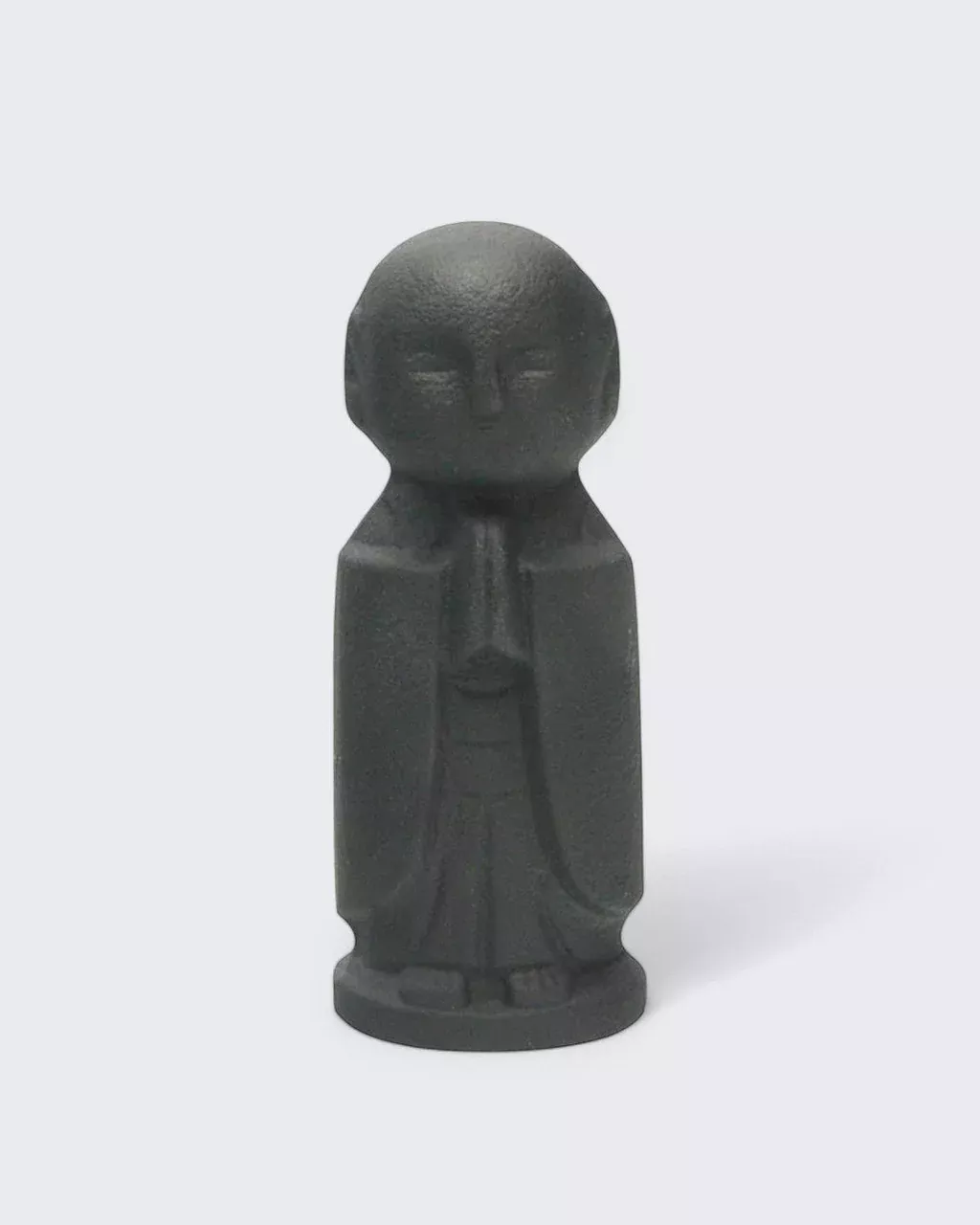

Cast iron figure of the baby Jizo, curled on his side in peaceful sleep with his body wrapped in a hand-painted green cloak. In Japanese Buddhist tradition, Jizo is honored as guardian of children and travelers, chosen for compassion and gentle protection. Set it on a desk, shelf, or windowsill, or offer it as a comforting keepsake.
Details
- Design: A small cast iron figure of the baby Jizo, curled on his side in peaceful sleep, one arm tucked beneath his cheek and his body wrapped in a hand-painted green cloak
- Size: 2″ h x 3″ w x 1 1/2″ d; approx. 7 oz
- Material: Cast iron with hand-applied green cloak finish
- Care: Wipe gently with a soft, dry cloth and keep away from moisture to preserve the iron finish and prevent rust
- Note: As a cast and hand-painted piece, slight variations in surface texture and cloak color are natural and part of its handmade character
- Origin: Made in Japan
Meaning & Intention
In Japanese Buddhist tradition, Jizo (Ksitigarbha) is one of the most beloved bodhisattvas — a figure who chose to delay his own enlightenment so he could remain among the suffering and ease their burdens.
He is honored as guardian of travelers, firefighters, and expectant mothers, and most tenderly as the protector of children, including those who died before their time.
Rendered here in infant form, he becomes both guardian and the one being guarded. Folk tradition holds that Jizo uses garments like the green cloak to shelter children’s souls in the afterlife.
The sleeping pose softens his role as vigilant watcher, suggesting that care for others and care for oneself are not opposites — that rest, too, is sacred.
Essence & Elements
Intention: Compassion, protection, peace, comfort
Chakra connection: Heart
Ideal for: Anyone seeking a small guardian figure for comfort, remembrance, or daily compassion practice
Suggested mantra: Compassion watches over all
Symbol: Jizo, bodhisattva and protector of children and travelers
Questions & Guidance
Why is the cloak green instead of the traditional red?
Jizo statues are often dressed in red, but green is also used in folk tradition. It is said to represent the garment he wraps around children’s souls to shelter them in the afterlife.
What does the resting pose mean?
The sleeping posture suggests peace and protection, and the idea that even a tireless guardian pauses to rest — an invitation to extend that same gentleness to yourself.
Is this appropriate as a gift for grieving parents?
Many people give a resting Jizo for exactly this reason. In Japan he is honored as the protector of children who passed before their time, and the infant form makes it a tender remembrance piece.
Can it live on a meditation altar?
Yes. Its compact size suits an altar, desk, or windowsill equally well. Some place it beside a candle or photograph as a focal point for a compassion practice.