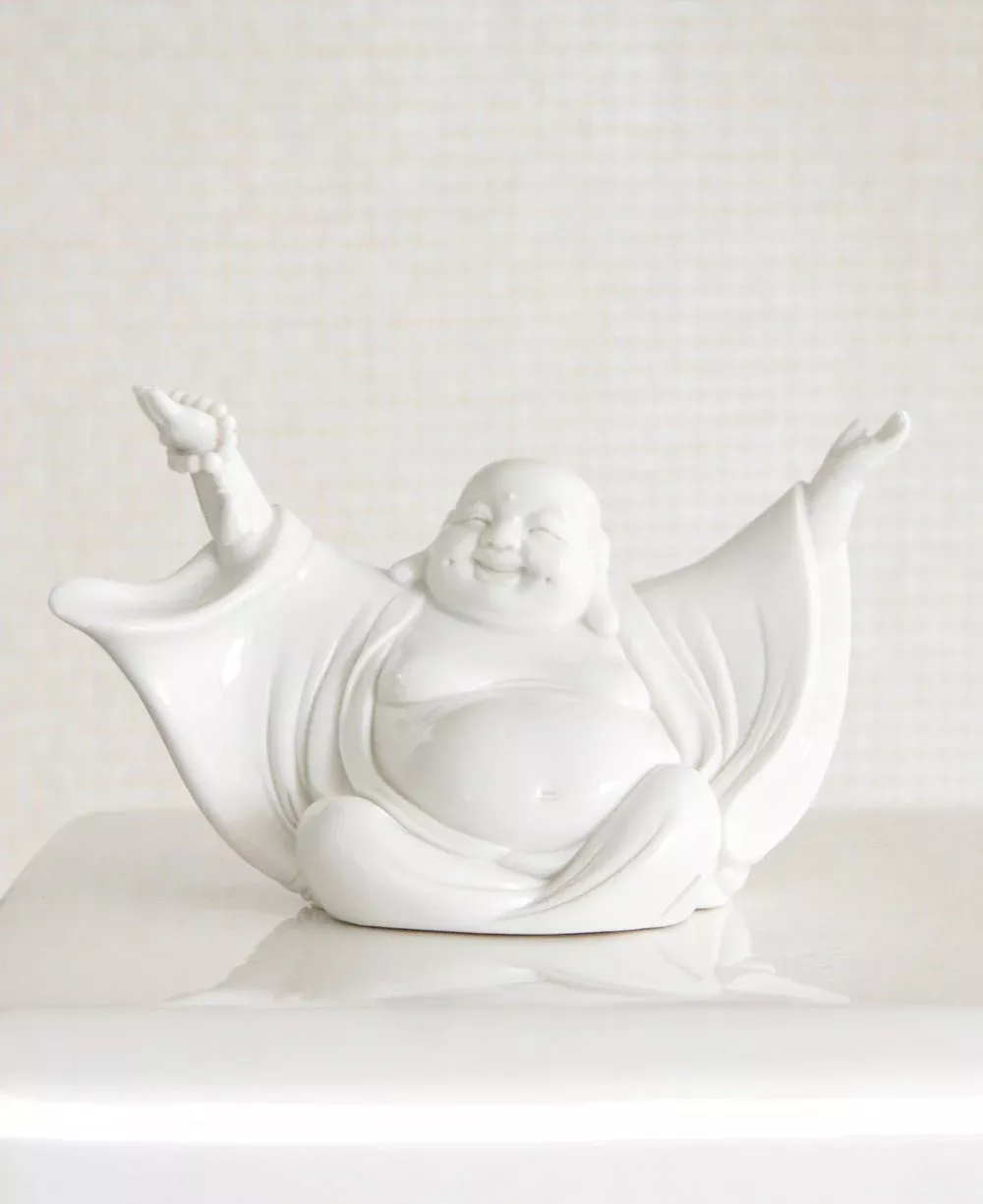
Porcelain sculpture of the Happy Buddha, arms wide in celebration. The figure is linked to Budai, a wandering Chinese monk whose humor and generosity made him a symbol of joy, abundance, and good fortune. Set him on a shelf, desk, or entry table to bring a lighthearted presence to a small space.
Details
- Design: Glossy white porcelain Happy Buddha seated with round belly bared, robes billowing into wing-like folds as he throws both arms wide in open, unrestrained joy
- Size: 6 ½ x 3 ½ x 2 ½ inches; weighs less than 1 lb (about 7 oz)
- Material: Hand-finished porcelain with a high-gloss white glaze
- Care: Dust gently with a soft, dry cloth. Handle with care and avoid dropping or knocking, as porcelain is fragile
- Note: Slight variations in glaze, finish, and detail are natural to handcrafted porcelain and add to each statue’s individual character
Meaning & Intention
The Happy Buddha is one of the most beloved figures in Chinese folk tradition, often identified with Budai, a wandering monk whose generosity and contentment made him a symbol of abundance long before his image became linked with Maitreya, the Buddha yet to come.
His full belly represents fullness of spirit rather than material excess. Rubbing it is a folk custom said to invite good fortune, though the deeper teaching is simpler: laughter and lightness are themselves a form of wisdom.
In this cheering pose, with both arms raised in celebration, the figure captures a moment of pure, uncomplicated joy — a visual cue to loosen the grip on worry and meet the day with open enthusiasm.
Essence & Elements
Intention: Joy, abundance, gratitude, good fortune
Chakra connection: Sacral
Ideal for: Bringing lighthearted, joyful energy into a home, workspace, or meditation corner
Suggested mantra: I welcome joy freely
Questions & Guidance
Where should I place the statue?
Many keep him near a doorway, workspace, or entry table so the raised arms greet you as you come and go. A shelf or meditation corner also suits the small tabletop size.
Is it traditional to rub his belly?
Yes. Rubbing the Happy Buddha’s belly is a long-standing folk custom said to invite good fortune. It is entirely optional and simply part of the affection people feel toward this figure.
Does he make a good gift?
He does. The cheering pose reads as celebration, which suits housewarmings, new beginnings, or milestones. Pair the gift with an intention of welcoming joy and abundance into a new space.