

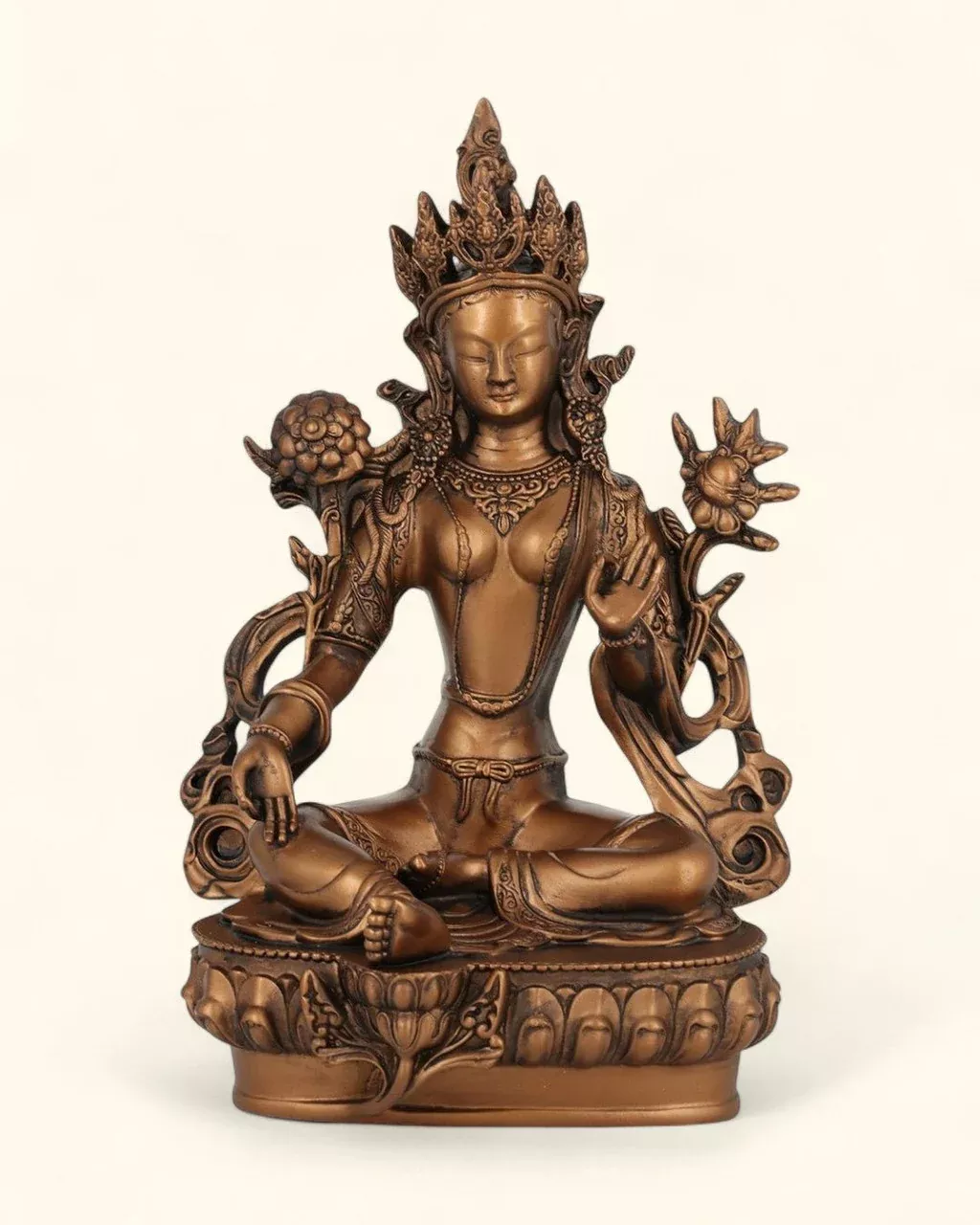
Handmade brass sculpture of Ganesh seated within a large veined leaf that fans out behind him as a throne. One hand rises in blessing; the other rests on his knee. In Hindu tradition, Ganesh is the remover of obstacles and patron of new beginnings. Set him at an entryway, altar, or desk to mark a fresh chapter.
Details
- Design: Finely detailed brass Ganesh sits cross-legged within a large, richly veined leaf that fans out as a throne, one hand raised in blessing, the other on his knee
- Size: 6.5 x 6.5 x 4 inches; weighs about 5 pounds
- Material: Brass, with hand-carved detailing across the crown and jewelry
- Care: Wipe gently with a soft, dry cloth. Keep away from moisture to preserve the brass finish
- Note: Handmade, so minor variations in metal finish or detailing may appear from piece to piece
- Origin: Handmade in India
Meaning & Intention
Ganesh is revered in Hindu tradition as the remover of obstacles and the patron of new beginnings, called upon before any important undertaking.
Here he is seated on a leaf rather than his usual lotus or mouse mount. The setting ties him to the natural world and to growth that unfolds slowly, the way a leaf unfurls.
His raised hand forms a gesture of welcome, an open invitation to approach with whatever weighs on the mind. His broad ears, deliberately prominent, are said to signal a deity who listens closely.
Broad, healthy leaves are traditional signs of prosperity, echoing his own associations with luck and good fortune in new ventures.
Essence & Elements
Intention: Abundance, gratitude, new beginnings, protection
Chakra connection: Root chakra (Muladhara)
Ideal for: Anyone starting a new venture, home, or chapter and seeking a grounded symbol of luck and gratitude
Suggested mantra: Om Gam Ganapataye Namaha
Symbol: Ganesh, remover of obstacles, on a leaf throne
Questions & Guidance
Why is Ganesh shown on a leaf instead of the usual lotus or mouse?
The leaf throne emphasizes his link to natural growth and abundance. It is a less common presentation than the lotus, and roots him more directly in the plant world.
Where is the best place to display this statue?
Many set it at a home altar, entryway, or desk as a welcoming presence for new beginnings and good fortune.
How can I use it when starting something new?
Pause before the statue, name what you are beginning, and take a breath of gratitude. Some repeat the mantra Om Gam Ganapataye Namaha before the first step of a project or move.
 No products in the cart.