
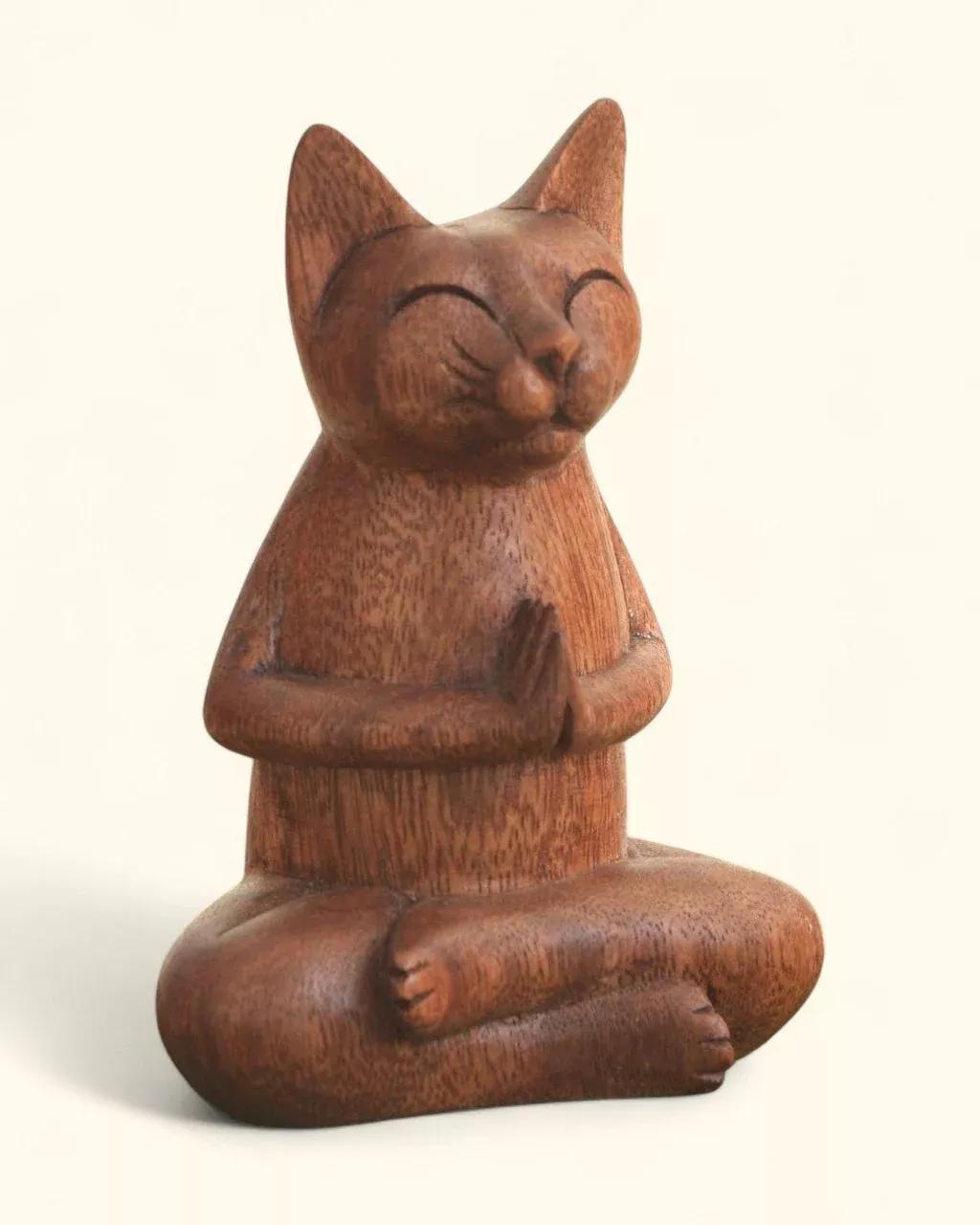
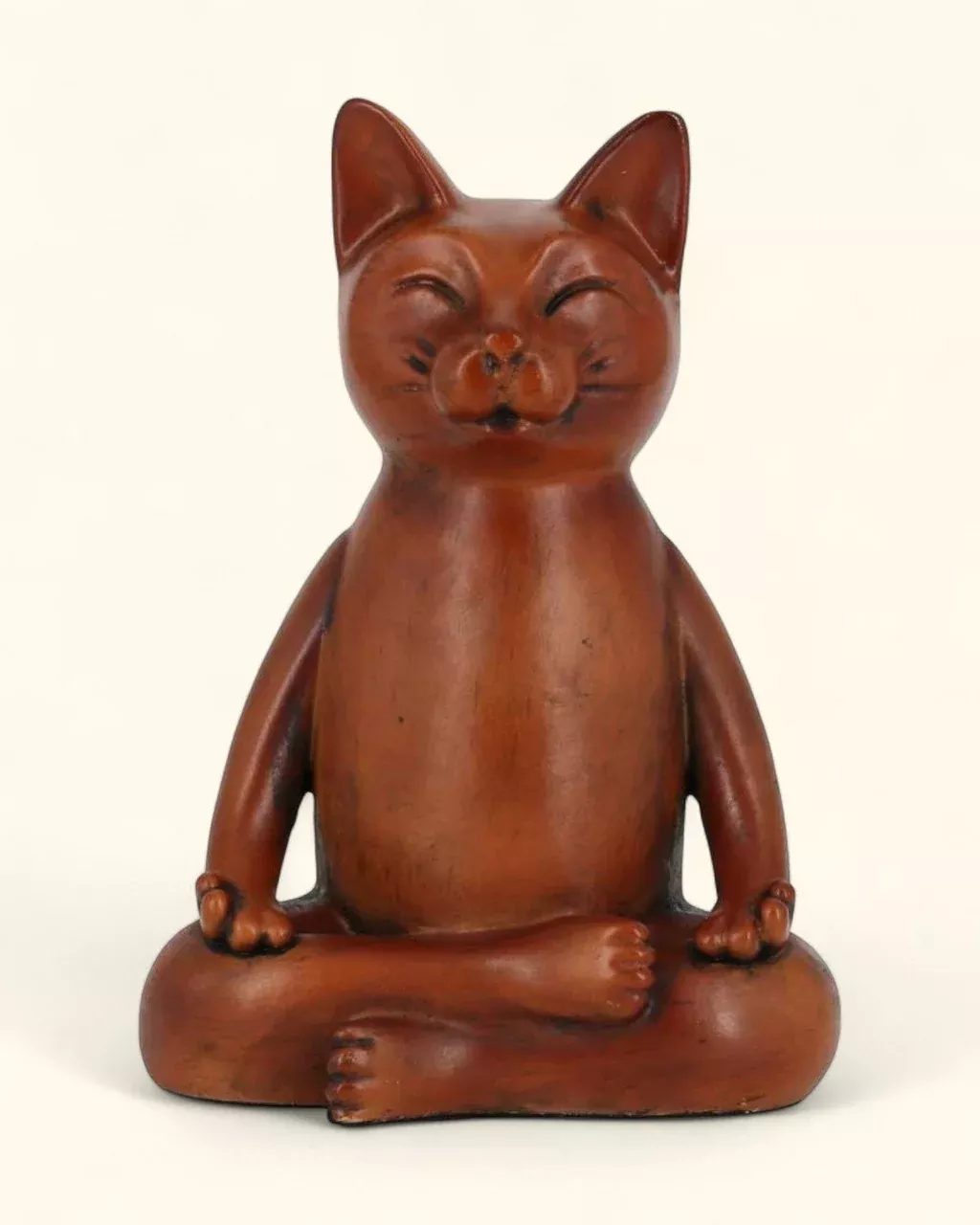
A small wooden cat sits cross-legged in lotus pose, paws pressed together at the chest in namaste. Hand-carved from a single block, the piece is a playful nod to stillness, gratitude, and the light in another being. Set it on a desk, bookshelf, windowsill, or altar, or give it to a cat lover with a meditation practice.
Details
- Design: Whimsical wooden cat in a seated lotus pose, eyes closed, mouth softly smiling, paws pressed in namaste. Carved from a single block with the natural grain left visible in a warm honey-brown finish
- Size: Approximately 5.5 x 4 x 2 inches; weighs approximately 5 oz
- Material: Hand-carved wood
- Care: Dust gently with a soft, dry cloth. Keep away from direct sunlight, heat, and moisture to preserve the wood’s natural finish
- Origin: Handmade in Bali, Indonesia
- Note: Because each statue is hand-carved from natural wood, grain pattern, tone, and small surface marks vary piece to piece, so no two are exactly alike
Meaning & Intention
The gesture at the cat’s chest is namaste — palms pressed at the heart, a greeting offered for centuries to acknowledge the light or spirit in another being.
Cats have long been read as symbols of independence, curiosity, and an uncanny gift for stillness. Watch one in a patch of sun and you see a master of doing absolutely nothing with total conviction.
Carving that same creature into a meditation pose draws a playful line between feline nature and human aspiration, suggesting presence might be simpler to reach than we make it.
Its closed eyes and folded paws work as a small anjali mudra cue: soften the shoulders, take one breath, carry on with a little more ease.
Essence & Elements
Intention: Gratitude, peace, playfulness, mindfulness
Chakra connection: Heart chakra (Anahata)
Ideal for: Cat lovers and meditation practitioners who want a lighthearted cue to pause and breathe
Suggested mantra: My light greets your light
Symbol: Namaste (anjali mudra), the cat as a figure of stillness and unhurried dignity
Questions & Guidance
Where does it work best in a room?
Anywhere your eye lands often — a desk, bookshelf, windowsill, or beside a meditation cushion. The small footprint means it sits comfortably next to books, plants, or a candle.
Would this suit someone who doesn’t meditate?
Yes. The humor lands on its own. It reads as an affectionate cat sculpture first, and the namaste gesture becomes a gentle invitation rather than a demand.
How can I use it in a daily practice?
Let it be a two-second visual pause between tasks. Glance over, press your own palms together, take one breath, and continue. Repeat the suggested mantra if it helps.



 No products in the cart.