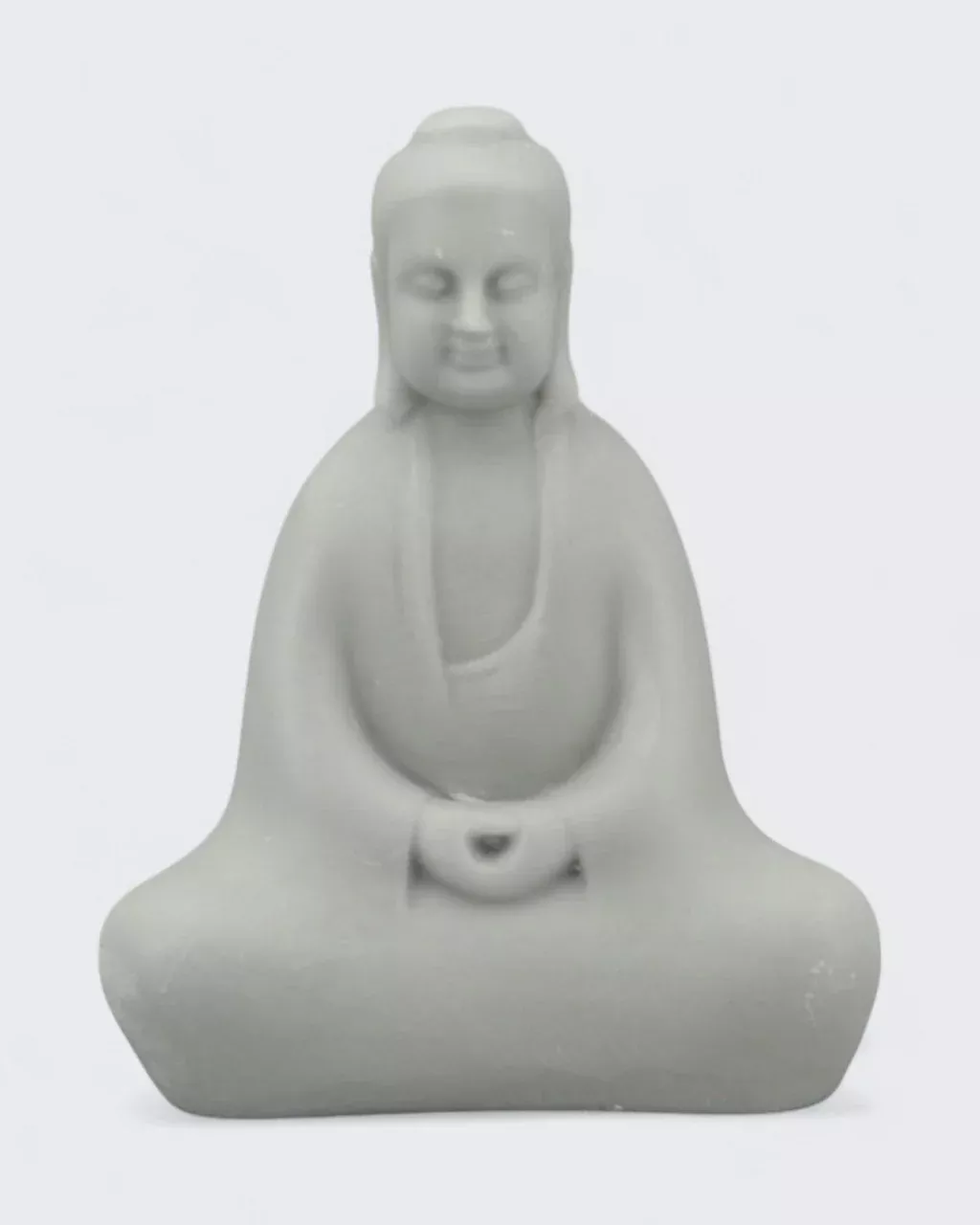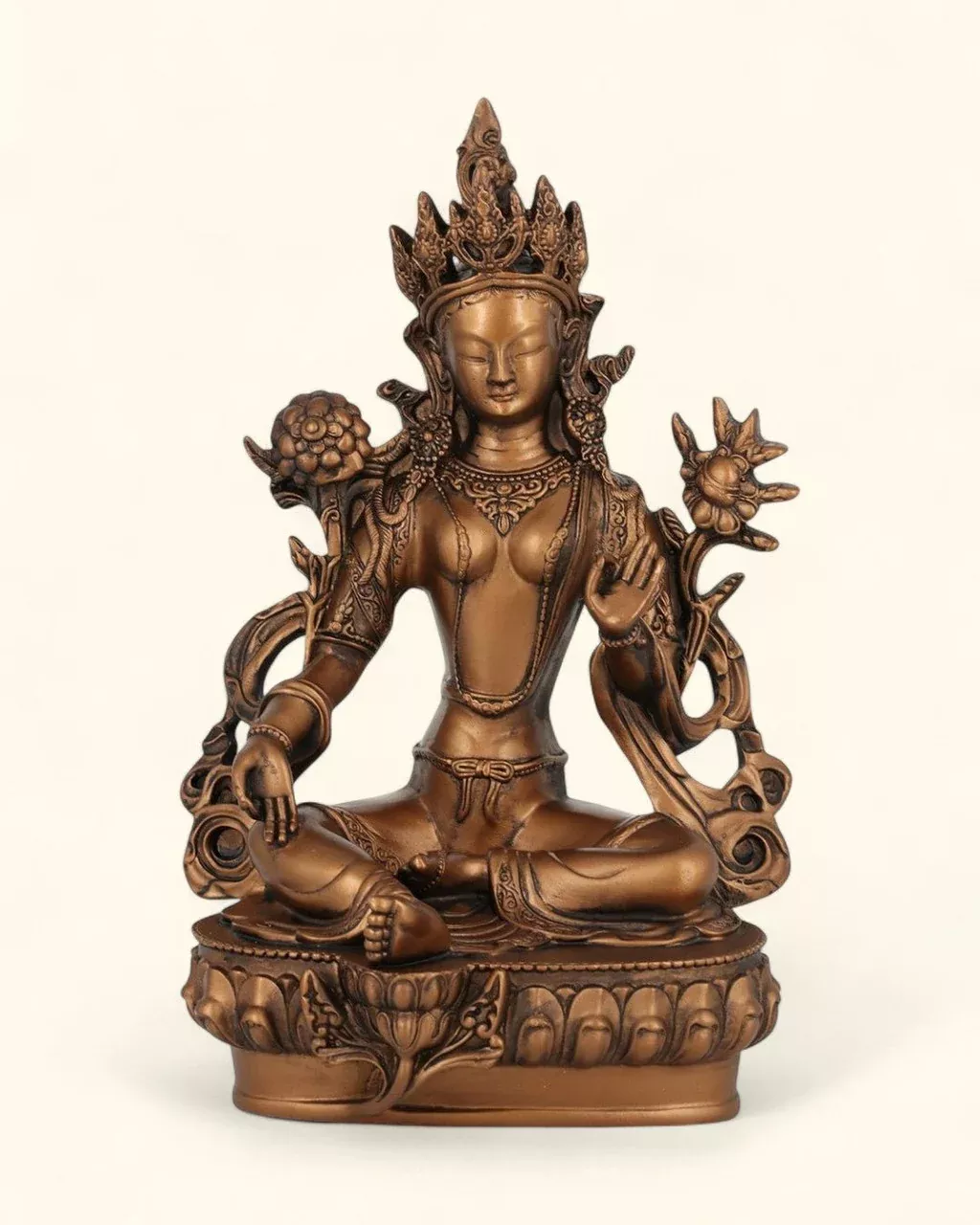
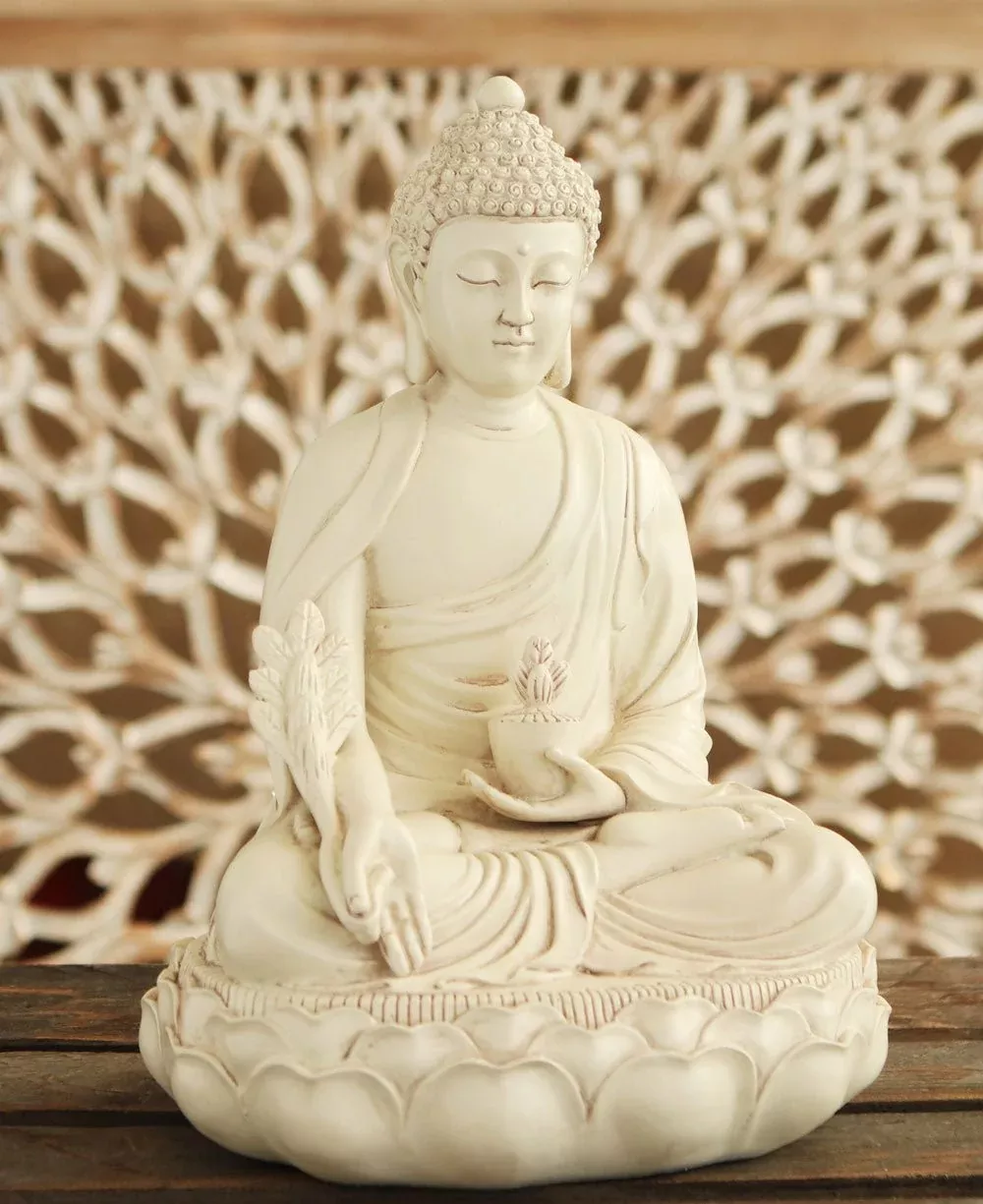
A seated Medicine Buddha sculpture cast in stone and finished by hand in soft cream. The figure holds a bowl of healing nectar in the left hand and the myrobalan plant in the right, the traditional attributes of the healer in Buddhist tradition. Place it on an altar, shrine, or bedside table as a focal point for restorative practice or as a gift to someone in recovery.
Details
- Design: A seated Medicine Buddha with the myrobalan plant rising from his right hand and the healing nectar bowl in his left, resting atop a carved lotus base
- Size: 11.5″ high x 7.5″ wide x 6.5″ deep (also listed as 11.5 x 7.5 x 6.4 inches), approximately 8-10.5 lbs
- Material: Cast stone with hand-finished cream coloring and a detailed carved robe
- Care: Dust with a soft, dry cloth and keep away from direct moisture to preserve the finish
- Note: As a handmade cast stone piece, slight variations in color, detail, and finish should be expected from statue to statue
Meaning & Intention
The Medicine Buddha, known in Sanskrit as Bhaisajyaguru, is revered as the great physician of Buddhist tradition — a figure devoted to the relief of suffering, both physical and spiritual.
He is recognized by two attributes: the myrobalan plant, a potent healing herb, held upright in his right hand, and the bowl of nectar in his left, said to address not only illness but the deeper afflictions of anger, attachment, and confusion.
Seated in meditation upon a lotus, he embodies the belief that true healing begins in a settled mind. The lotus, rising clean from murky water, echoes the same message: that clarity is possible whatever the conditions.
In many homes the statue is placed with the intention of supporting recovery or easing a difficult season.
Essence & Elements
Intention: Healing, peace, restoration, calm
Ideal for: A calming focal point for healing, recovery, or restorative meditation practice
Suggested mantra: May all beings be healed
Symbol: Myrobalan plant, healing nectar bowl, lotus base
Questions & Guidance
Where is the best place to display this statue?
It suits an altar, meditation corner, or shrine, ideally somewhere undisturbed where it can serve as a focal point for healing intentions. A bedside table also works well when tending to recovery.
How do I use it in a healing practice?
Sit with the statue at eye level, take a few slow breaths, and silently offer the mantra ‘May all beings be healed’ for yourself or someone in your care.
Is it suitable as a gift for someone unwell?
Yes. The figure has long been associated with recovery and restoration, making it a considered gift for someone moving through illness or a difficult season.